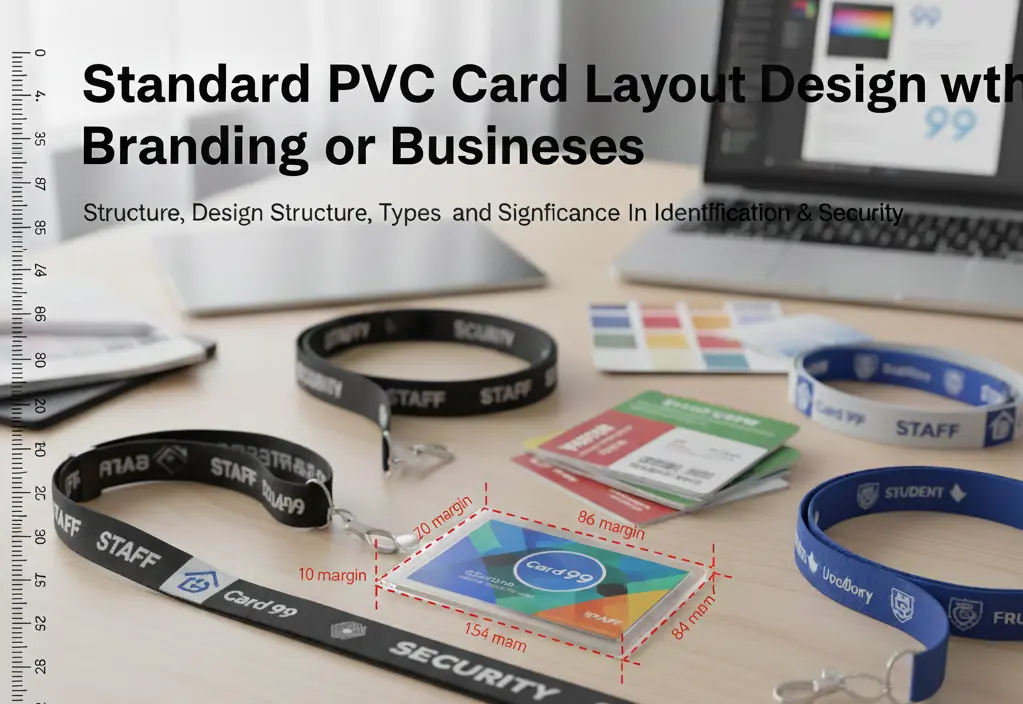
PVC ID Card Design: Construction, Components, and Significance of ID card in the workplace.
PVC ID cards have become a vital component of the contemporary identification system, in particular, in the structured, computerized, and protective world today. In schools and colleges, offices, factories, hospitals, government setups and even mega events, PVC ID cards are important in verifying identities, controlling access, monitoring attendance as well as representing the brand.
The effectiveness of ID card however does not just rely here on the material going through it, it heavily relies on the manner in which information is displayed. It is here that a PVC ID Card Layout is very crucial.
A good layout of PVC ID card would be clear, durable, professional, secure, and immediately recognizable, and it will be easier to manage the people, assets, and access of an organization.
What Is a PVC ID Card?
A PVC ID card is a plastic identification card that is composed of Polyvinyl Chloride (PVC) material. PVC is an excellent material in the production of ID cards because it is stronger, flexible, and compatible with the current printing and scanning devices.
5 Major ID card features of PVC cards.
The use of PVC ID cards is preferred as it provides:
High durability- Not easily bent or cracked.
Waterproofness and dustproofness- Can be used on a daily basis.
Long life span- Best suited in long-term identification.
Professional look – Clean and high end look.
Printer and scanner support - Supports barcode, QR, RFID and magnetic strip systems.
Common Uses of PVC ID Cards
PVC ID cards are normally used as:
Employee ID cards
Student ID cards
Visitor passes
Event and conference ID cards.
Membership cards
Access control cards
Loyalty cards
They are applicable in nearly any industry due to their flexibility.
What Is a PVC ID Card Layout?
A PVC ID Card Layout is a design framework and layout of all the visual and informational contents that are printed on an ID card. This includes:
Text placement
Images and photographs
Logos and branding
Colors and fonts
Security elements
Information on the front and backside.
The design determines the flow of information both graphically and the ease with which a human may spot the cardholder at a glance.
An ideal PVC ID card layout will have an ideal balance between:
Design aesthetics
Information clarity
Functional usability
The importance of PVC ID Card Layout.
1. Professional Appearance
An organizational layout which is clean, well structured and aligned translates into professional standards within the organization. Whether it is a corporate office or a learning institution, an appropriate design of an ID card creates trust and credibility. Lack of layout with text cluttered or poor quality images can ruin the image of the organization.
2. Simple and Rapid Identification.
The primary aim of ID card is immediate recognition. A good layout ensures that:
Name is apparent through the initial sight.
Photograph is distinct and identifiable.
Role or designation is readable.
This enables security staff, personnel and visitors to distinguish people and not confuse with them.
3. Security and Access Control
PVC ID cards of the modern world tend to be equipped with security features like:
Barcodes
QR codes
RFID chips
Magnetic strips
An appropriate layout will make sure that these elements are positioned appropriately so as to be scanned easily and there are minimum errors in place to enhance security and efficiency of the systems.
4. Brand Representation
PVC IDs serve as a mobile marketing device. By using:
Organization logos
Brand colors
Consistent fonts
An effective design reinforces brand identity and gives a cohesive visual look to the whole employees or students.
Standard Size of PVC ID Card
The standard size of most PVC ID cards is CR80 and it is:
85.6 mm × 54 mm
Every bit as big as an ATM or debit card. The size is paramount in designing. The arrangement has to be streamlined to:
Avoid overcrowding
Maintain readability
Ensure print safety margins
Mis-sizing may cause a text to be truncated or distorted when being printed.
The Major Components of a PVC ID Card Layout.
1. Organization Logo
Wherever it occurs, it generally takes up the top or corner. Assists in immediate brand awareness. High-resolution should be sharp printed. It is advisable to have the same logo everywhere on the cards.
2. Cardholder Photograph
One of the most significant components of a photo is the ID card. Best practices of photo placement:
Possibly in the form of a passport or a square.
Front-facing, well-lit image
Clear background
Stands on one side or the other towards balance.
An image of low quality may cause complications in identification, decrease the effectiveness of cards.
3. Cardholder Name
Written in big and readable font. And must be among the most noticeable things. Here she is standing near the photograph. It should not have decorative fonts.
4. Designation or Role
This factor assists to determine the position of the cardholder like:
Employee
Manager
Student
Visitor
Security Staff
The clarity of role helps in the internal communication and access control.
5. ID Number or Roll Number
Acts as a unique identifier Critically important to manage records. In many instances placed beneath the image or name. Applied to the database linking and verification.
6. Department or Class
Commonly used in:
Corporate offices
Educational institutions
Examples include:
IT Department
HR Department
Class XII – Science
This data is useful in classification and efficiency of operation.
7. Barcode / QR Code
Used for:
Attendance tracking
Access control systems
Asset management
Data retrieval
Placement tips: Normally located at the bottom side or back side. Should be printed well in order to scan correctly. There has to be sufficient white space.
8. Issue Date and Expiry Date
These dates help in:
Validity tracking
Security enforcement
Renewal management
Particularly significant to visitor cards, contract workers and event passes.
9. Signature/ Authority Stamp.
Adds authenticity Prevents misuse Includes sign of HR signature or principal often. Usually in student IDs and employee IDs.
Front Side Back Side PVC ID Card Design.
Front Side Layout
The front side revolves around visual recognition and generally it contains:
Organization logo
Cardholder photo
Name
Designation
ID number
This side must be simple, bare and readable at a glance.
Back Side Layout
The functional and security needs are supported on the back side and they include:
Barcode or QR code
Instructions or rules
Emergency contact details
Address or website
Such expressions as Company Property.
An effective back design prevents any uninformed and insecure card.
Types of PVC ID Card Layouts
1. Employee PVC ID Card Layout
Professional color scheme Strong brand identity Clear role hierarchy The compatibility of access control. Applied in corporate campuses, hospitals, factories and offices.
2. Student PVC ID Card Layout
There are roll number and class. Often more colorful Name of the institution is conspicuous. Other times contains blood group or transportation information.
3. Visitor PVC ID Card Layout
Minimal information Validity date highlighted Time-bound usage Frequently has bold Visitor label.
4. Event PVC ID Card Layout
Event name and logo Role of the participants (Guest, Speaker, Organizer) Sponsor logos Event date and venue Was made to be informative and appealing.
PVC ID Card layout Design Best Practices.
Select easy to read fonts. Do not pour too much information. Be in the right place and position. Readability is to be done using high-contrast colors. Have safety margins of printing. Pre-test prior to large scale production. Be consistent in all of the cards. Considerable design minimizes mistakes and costs of reprinting.
Avoid Common Mistakes
Very small text size Low-resolution images Poor color contrast Missing essential details Excessive use of decorations. Wrong positioning of barcodes. Such errors make us less useful and professional.
Significance of PVC ID Card Design Consistency.
Application of a standardized PVC ID card layout in an organization: Strengthens brand identity Makes the printing and reissuance easier. The security teams at Helps recognize valid cards within seconds. Produces a standardized and systematic appearance. Stability also enhances the efficiency of the operations.
PVC ID Card Layout FAQs
Answers to common questions about PVC ID Card Layout — how they work, sizes and more.
Need Custom Id Cards?
Get high-quality PVC, RFID, digital membership, etc. cards tailored to your business.
Request a Free Quote