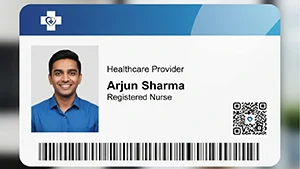
What is Healthcare ID Card?
A medical identification card is a document of identification by your health insurance provider or medical provider network. It has important details that enable medical facilities to ascertain your coverage and benefits efficiently.
The vast majority of the cards have:
- Your first and last name and name of policyholder (when they are different)
- Member ID number - it is yours uniquely
- Insurance company name and logo
- Group number - this number indicates your employer or plan
- Type of plan (e.g., PPO, HMO, or EPO)
- Contact information of member services
- Co-pays on the various kinds of visit
- Pharmacy benefits information
It could be considered your healthcare passport without it, the entire system may be much more complex to move through.
What Makes Healthcare ID Card Important?
Right, you may ask, can my doctor not simply connect my details with his system?
The brief answer: Sometimes no.
This is the reason as to why healthcare ID cards are very important:
Proof of Coverage-This is made sure that you have an active health insurance.
Quicker Check-In- The details about you may be entered at faster speeds by the receptionists after short searches.
Proper Billing Code and Plan accrual of the card- The card possessing correct coding in the billing and plan. Prevent Dismissal of claims Missing or inaccurate information may be the reasons of delayed claims.
In-Network Benefits Access-Displays your specific network to Prevent paying an unexpected bill. Without it you may wind up out of pocket or getting delayed treatment.
The Many Variants of Healthcare ID Card
Healthcare ID cards do not all have the same look and functionality. Several of these could be any one you have depending on your coverage:
1. Personal Health Care Insurance Cards
Published by such companies as Blue Cross, UnitedHealthcare, or Aetna. These normally include visits to doctors, hospitalization, and occasionally dental or vision care.
2. Government Program cards
In the case of others such as Medicare, Medicaid or VA Health. The appearance of such cards varies with that of the private insurance cards but the usage is close.
3. Cards of an Employer-Sponsored Health Plan
In the case of your employer having provided health insurance then your ID card would contain the information of your employer and also of the insurer.
4. Specialty Program Cards
To cover dental-only, prescription drug coverage or vision-only. And you can have them each on a separate card.
Reading a Healthcare ID Card
Because many people have found themselves gazing at the healthcare card and seeing nothing but numbers and wondering what those numbers could be. So here is a rough breakdown:
Member ID - Your identification number in the insurance system.
Group Number - Identified with the particular plan you are on which is normally affiliated with your employer.
Type of Plan, PPO, or HMO, or otherwise is what dictates your rules in a network.
Co-pays - Displays set costs you have to pay visits, such as $20 primary care.
Phone Number – Contact number to call to ask questions or approvals in advance.
RxBIN / RxPCN - Coverage of pharmacy benefit to carry out process on prescriptions. Being in possession of the knowledge of how to read your card will help so that one is never taken by surprise regarding cost or cover.
The Healthcare ID Card Management Tips
Lost healthcare ID card may be more than a nuisance or inconvenience, it may result into a delay in care or billing issues. This is how to deal with it:
And Keep it Accessible- Carry it in your wallet or have a picture in your cell phone.
Update After Life Changes -New address? Changed employers? Take a fresh card.
Ask to Replace It Now- Ask the majority of insurers to do this online or by their app.
Take Digital Versions visibly-Insurance firms are embracing safe apps that offer digital ID cards.
Check Twice at Appointments- ensure that you take a card with the latest update to the provider just before treatment
Final Thoughts
Your medical ID card is also little; however, it is very important to ensure that this journey is not stressful at all. It does more than serve as a certificate of insurance it gives rapid service, precise billing and a sense of security.
Whenever you next walk into your physician, bear in mind: this small piece of paper in your purse or wallet might end up getting you out of hours of headache, and not to mention hundreds of dollars.
Healthcare Id Card FAQs
Answers to common questions about healthcare cards — how they work, security, policies and more.
Need Custom Membership Cards?
Get high-quality PVC, RFID, digital membership, etc. cards tailored to your business.
Request a Free Quote